

# Realistic Water & Soil Management – RWSM
**Realistic Water & Soil Management** expands Farming Simulator 25 with a permanently stored water, soil and plant balance.
Rain, irrigation, evaporation, soil type, terrain, compaction, tire pressure, tillage and plant development are directly intertwined. As a result, fields no longer only react with simple conditions such as “dry” or “wet”, but rather have a multi-layered water balance with topsoil, root zone and subsoil.
Natural depressions stay moist longer, heavy vehicles compact wet soil more and inadequate tire pressure increases the load on the topsoil. These influences have long-term effects on soil structure, root health, plant development and yield.
# Features
## Multi-layered water balance
The soil water balance is calculated separately for:
* Topsoil from 0 to 10 cm
* Root zone from 10 to 30 cm
* Subfloor from 30 to 60 cm
Precipitation, irrigation, evaporation, seepage, drainage, surface runoff, plant water absorption, soil type, soil structure, compaction and landform are taken into account.
The usable field capacity is displayed separately from the complete pore saturation. Water above field capacity appears as excess water and can seep away, run off or cause waterlogging.
## Different soil types
RWSM differentiates between different types of soil with their own properties, including:
* loamy sand
* sandy loam
* Clay
* silty clay
Each soil type has its own values for field capacity, wilting point, water retention, infiltration, drainage, bearing capacity, risk of compaction and sinking depth.
Sandy soils dry faster. Loamy and clay-rich soils store more water, but remain soft longer and are at risk of compaction.
## Dynamic weather and climate
Regional climate profiles influence:
* Precipitation
* Temperature
* Evaporation
* Wind
* Humidity
* Sunlight exposure
* seasonal distribution
The game's actual weather data directly affects soil moisture, drying and evaporation.
## Realistic drying
Drying does not take place via a simple timer. Temperature, wind, sun, humidity, soil type, compaction and surface water determine the speed.
A wetness memory prevents a field from becoming completely dry and viable again immediately after rain.
## Natural depressions and waterlogging
RWSM detects local low areas within a field.
These areas:
* collect water
* dry more slowly
* have lower load capacity
* Promote sinking and track formation
* increase the risk of compaction
* can cause oxygen deficiency to the roots
The terrain evaluation is cached for better performance.
## Soil compaction
The compression is saved separately for:
* Topsoil
* Root space
* Underbody
have an influence:
* Vehicle weight
* Payload
* Wheel load
* Axle load
* Tire width
* Tire pressure
* recommended field pressure
* Soil moisture
* Soil type
* Slip
* Speed
* Cornering
* Multiple crossings
High tire pressure puts greater strain on the topsoil for the same wheel load. A suitable low field pressure increases the contact area and protects the ground. High axle loads can still compact deeper soil layers.
## Multiple crossings
Repeated crossings of the same lane are taken into account.
The first crossing usually causes the greatest immediate damage. Further passes further compact the already contaminated soil.
Among other things, the following are saved:
* Crossings
* Compaction
* Track depth
* Shear damage
* Plant damage
* Edit history
## Roots and plant stress
RWSM simulates:
* Root health
* Fine root health
* achievable root depth
* Drought stress
* Waterlogging
* Lack of oxygen
* Compaction stress
* Nutrient stress
* pH stress
* mechanical damage
Damaged roots are less able to absorb water and nutrients.
## Impact on earnings
The actual yield is influenced, among other things, by:
* Water balance
* Dryness
* Waterlogging
* Root health
* Compaction
* Soil structure
* Nutrients
* pH value
* Seedbed
* Weeds
* Lanes
* mechanical damage
Damage does not take full effect immediately, but builds up depending on the strength and duration.
##Crop Vitality Visuals (Alpha Version)
A stored vitality system creates local differences in the plant population.
Possible are:
* different plant heights
* changed stock density
* incomplete stocks
* Visible stress zones
* weaker development
* Storage locations
The plants remain technically ready for harvest. RWSM does not alter original growth or harvest maturity levels.
## Weed competition
Weeds compete with cultivated plants for water, nutrients, light and development space. Strong weed pressure can reduce development and yield.## Tillage
Different devices have different effects:
* Plow
* Cultivator
* Disc harrow
* Rotary harrow
* Subsoiler
* Seeder
* Roller
Working depth, soil moisture, compaction, soil structure, seedbed strength, multiple cultivation and possible plow soles are evaluated.
Deep loosening is only fully effective when the soil moisture is suitable. Cultivating when the soil is too wet can cause additional structural and lubrication damage.
## Seedbed and rollers
RWSM evaluates seedbed strength.
A seedbed that is too loose offers poor soil sealing. Too much reconsolidation can impair air flow and root development.
Rolling acts as a real area-wide reconsolidation and is evaluated depending on the type of soil, moisture and compaction.
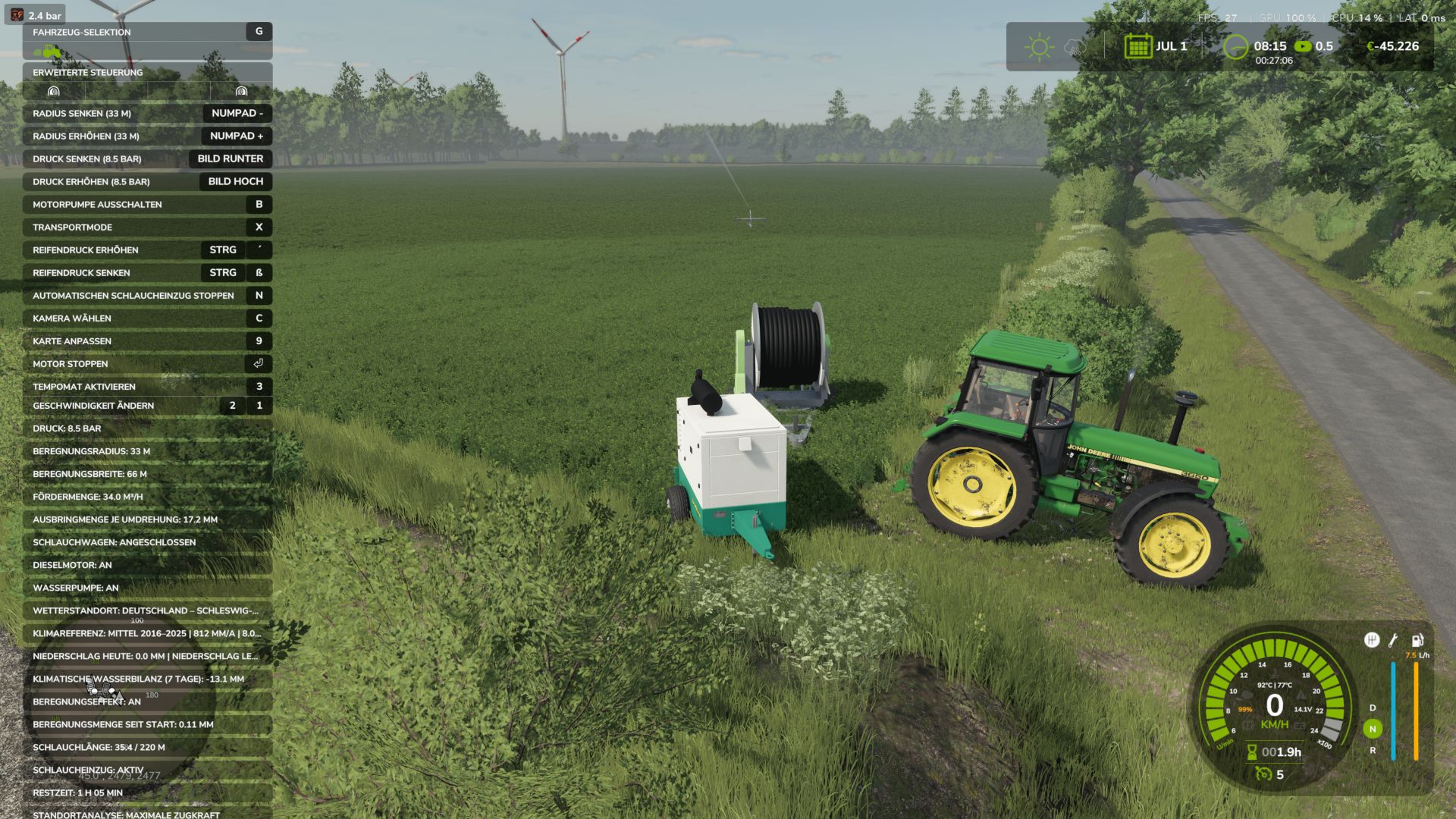
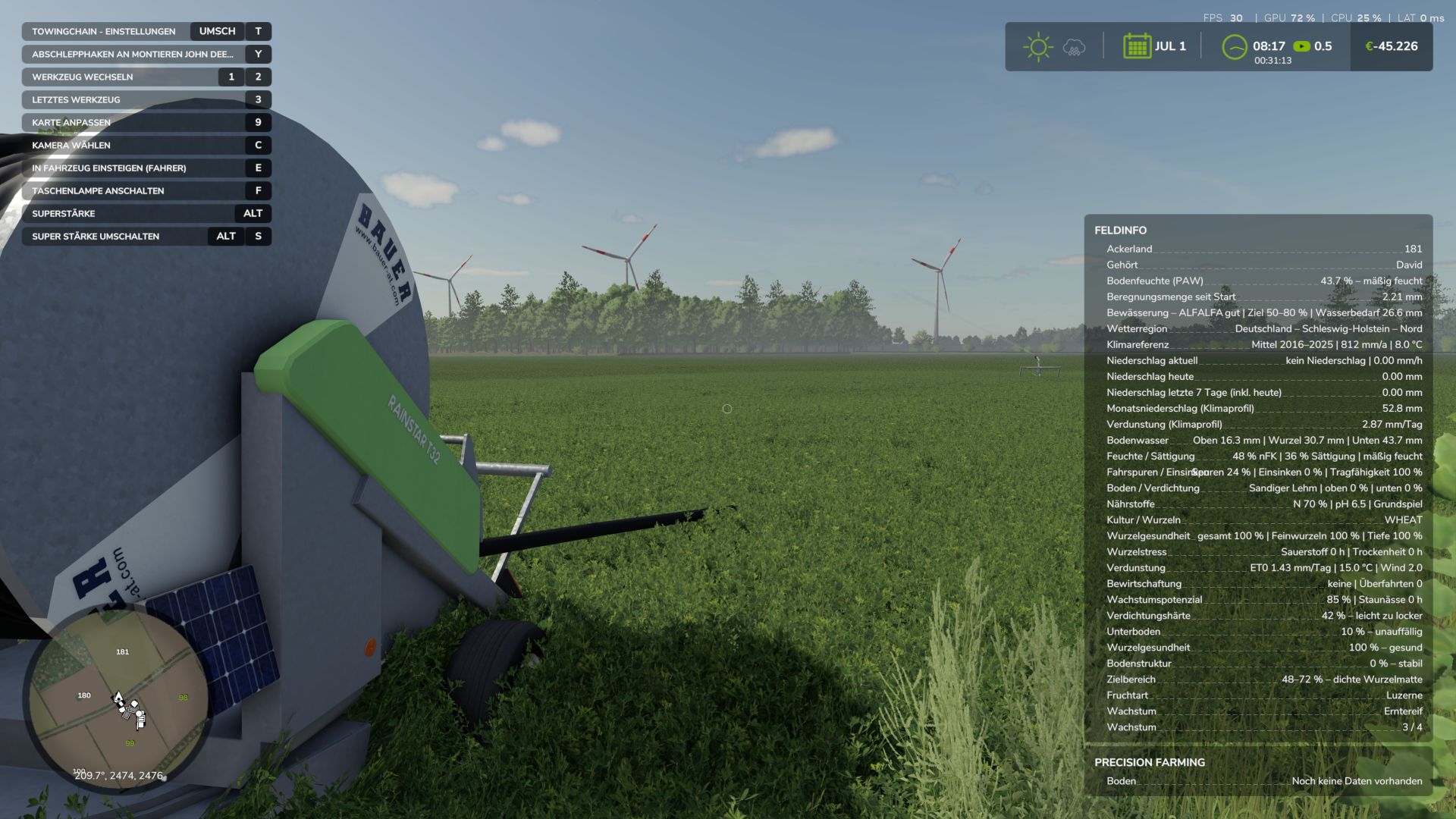
## Irrigation system
The mod includes a functional Rainstar irrigation system with:
* Motor pump
* Hose reel
* Sprinkling rail
* adjustable pump pressure
* adjustable radius
* real application rate
* Water consumption
* Soil input in millimeters
* automatic hose retraction
* Work and transport mode
* Parking brake
* Clutch aid
* Connection markers
*sound
* visible water jet
The water applied changes the actual water balance of the soil.
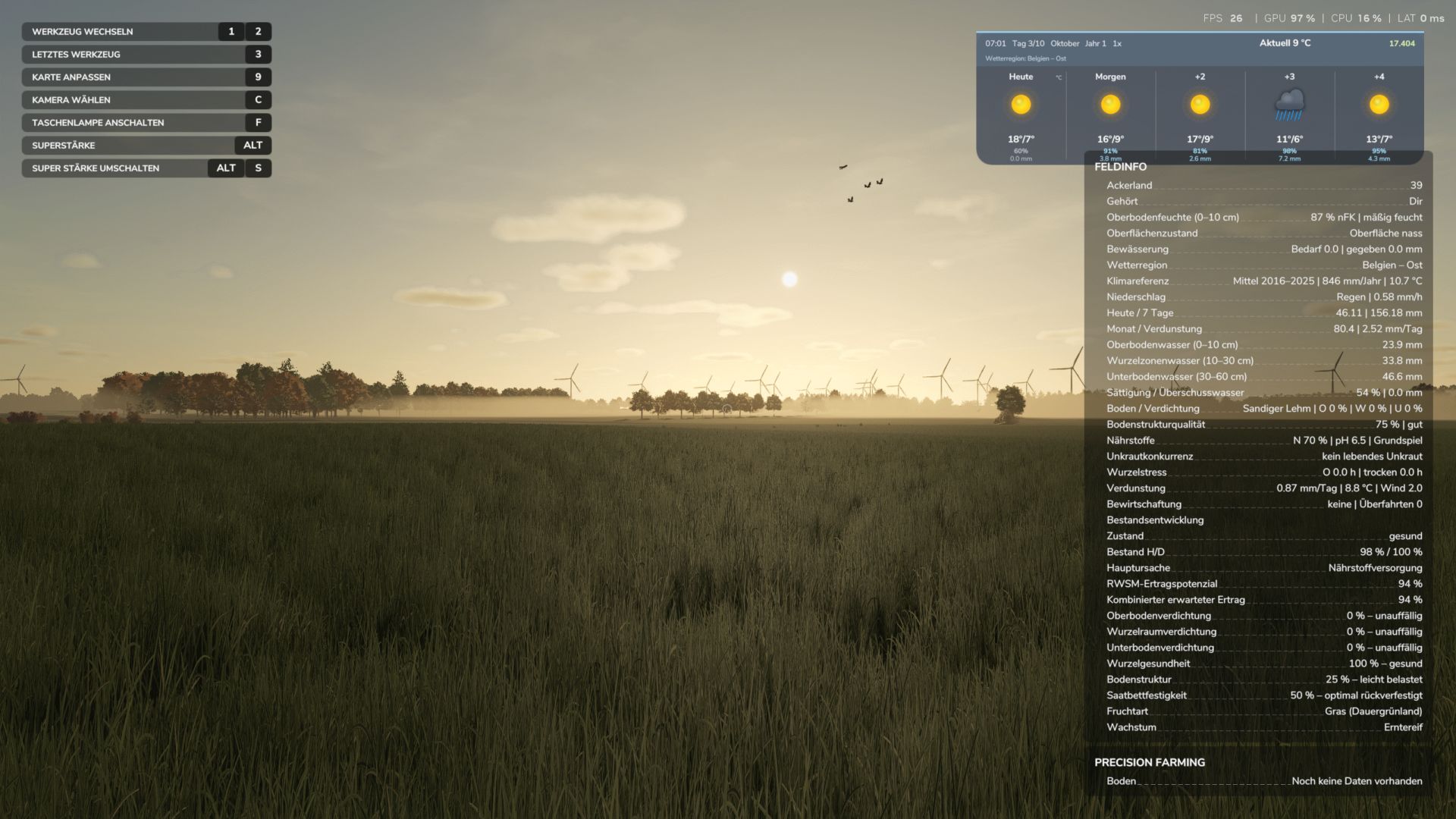
## Extended field info
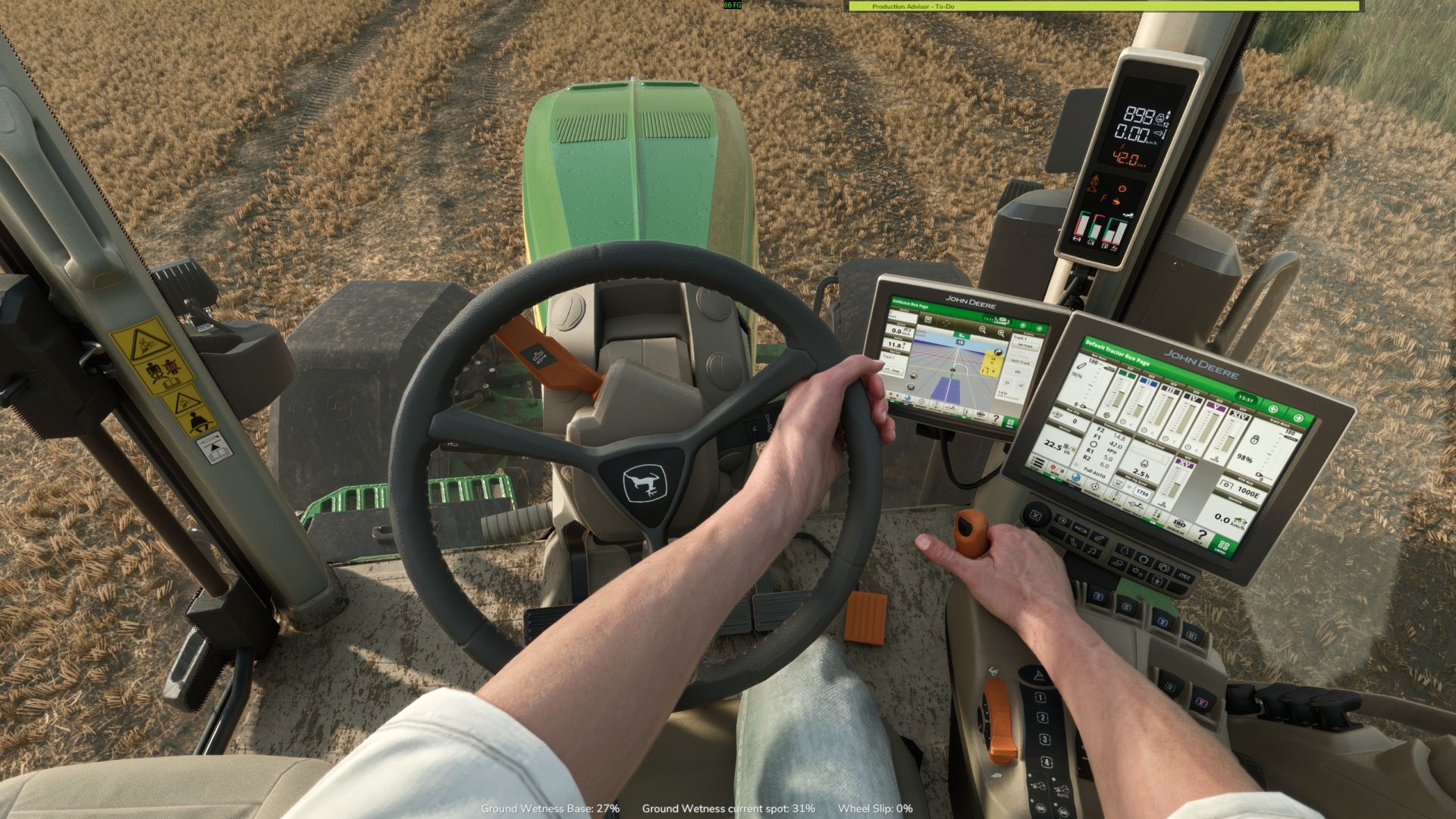
The field info shows, among other things:
* Topsoil moisture
* Pore saturation
* Surface condition
* Excess water
* Water in all layers of soil
* Soil type
* Evaporation
* Temperature and wind
* Compaction
* Soil structure
* Seedbed strength
* Root condition
* Plant vitality
* visible height and density
* main cause of stress
* Climate values
## Water-Soil API
RWSM provides a versioned interface for other mods.
The API provides, among other things:
* Soil type
* Soil moisture
* Pore saturation
* water available to plants
* Surface moisture
* Carrying capacity
* Trafficability
* Sink factor
* possible sinking depth
* Compaction
* Track depth
* Root condition
* Evaporation
* recommended tire pressure
* Plant vitality
Other mods can report traffic loads and ground effects back to RWSM.
## Connection with Visual Mud Tracks
In connection with Visual Mud Tracks, among other things, the following are transmitted:
* Wheel load
* Axle load
* Tire pressure
* Tire width
* Slip
* Vehicle weight
* Payload
* Soil moisture
* Carrying capacity
* Sink factor
* possible track depth
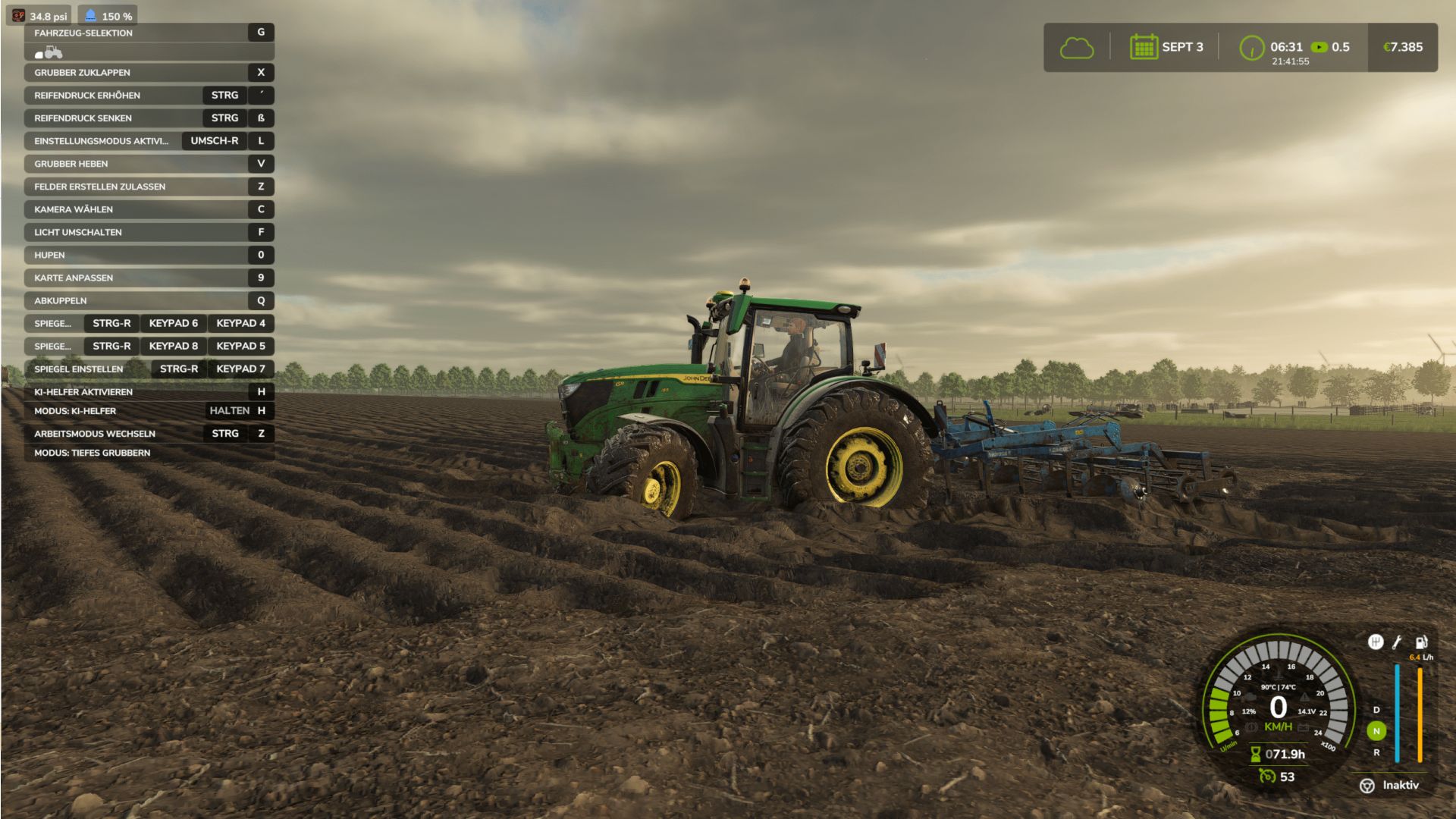
This allows visible tracks, sinking, mud and tire behavior to be linked to the actual ground condition.
## Saving and multiplayer
The following are permanently stored and synchronized, among other things:
* Water balance
* Precipitation history
* Compaction
* Track depth
* Soil structure
* Root condition
* Edit history
* Plant vitality
* Irrigation data
* Pump pressure
* Irrigation radius
* Hose retraction
The calculation is server authoritative and designed for multiplayer saves.
---
# Highlights
1. **Multi-layered water balance**
Topsoil, root zone and subsoil react separately to rain, irrigation, evaporation and infiltration.
2. **Long-term compaction with an impact on yield**
Tire pressure, wheel load, axle load, soil moisture, slip and multiple passes influence the soil and plants in the long term.
3. **Direct connection to Visual Mud Tracks**
Soil moisture and load capacity control sinking, tracks, mud and tire behavior.
4. **Local waterlogging in natural depressions**
Low areas stay wet for longer and become real problem areas.
5. **Visible Plant Vitality**
Elevation, density and stress zones can vary locally without changing crop maturity.
6. **Realistic tire pressure influence**
Excessive pressure increases topsoil stress, while appropriate field pressure protects the soil.
7. **Root Health and Long-Term Plant Stress**
Dryness, waterlogging, compaction, pH value and nutrients work together.
8. **Functional irrigation**
Pump pressure, radius and application rate determine the real water input.
9. **Different tillage systems**
Plows, cultivators, subsoilers and rollers have their own effects and risks.
10. **Extensive field info**
Water, soil, compaction, roots, seedbed and plant condition are directly visible.
11. **Persistent Multiplayer System**
Ground and water damage is retained and synced after saving.
12. **Open Water-Soil API**
Other mods can read land values and connect their own systems to them.
13. **No change in growth stages**
RWSM assesses and visualizes plant stress without overwriting original harvest maturity levels.
**Author: Sherman**
**Many thanks to JD Power and da-hoffi for providing the 3D model of the Rainstar.**
Rainstar Ground Support
* Two additional invisible GIANTS WheelPhysics contact points on the rear support legs.
Rainstar Parking Brake
* Additional holding force in work mode to prevent the drum from slipping during retraction.
Rainstar Rear Supports
* Rear supports act as braked reaction points upon contact with the ground.
Rainstar AutoReel
* Retraction system fundamentally overhauled.
* Old pretension/tension spring approach removed.
Rainstar Physics
* Only a single instance modifies the towing joint.
* Conflicts between multiple update routines resolved.
Rainstar Start-up Behavior
* Smoother start.
* Normal: approx. 3 s; Road → Field: approx. 4.5 s.
Rainstar Hose Length
* Actual hose length used at start-up.
* No more artificial pretension.
Rainstar Joint
* Actual GIANTS ComponentJoint frame evaluated in real-time.
* Folding and working positions taken into account.
Rainstar PhysX
* Trolley remains physically active during retraction.
* PhysX sleep and stick-slip effects reduced.
Rainstar Retraction Speed
* Physical retraction speed limited and integrated smoothly.
Rainstar Hose Origin
* Physical origin fixed during retraction.
* Drum rotation no longer distorts the hose length.
Rainstar Distance Calculation
* Uses the fixed physical hose origin instead of the moving visible hose node.
Optima Speed
* Unrealistic initial speed of 900 m/h corrected.
* Current speed: **50 m/h**.
Optima End Position
* Capture range reduced from 4.5 m to 2.5 m.
* Sprinkler trolley is pulled closer to the machine.
Optima Pump Cut-off
* Pump reliably switched off upon complete retraction.
* Multiple verification checks performed over 3 seconds. Optima Pump Status
* Pressure, flow rate, and pump status are reset immediately.
Optima Preview Security
* Node and transform access secured.
Optima Shop Configuration
* Temporarily missing nodes no longer reset the hose distance to 0.
Optima Sprayer
* Missing WorkArea parameters are restored during configuration changes.
Optima FillUnit
* Temporarily missing FillUnits no longer cause Lua errors.
Optima Groundwater
* Refilling only occurs when the vehicle is actually physically loaded.
Global Pump Control
* Removed.
* Pump settings can no longer be adjusted on foot or from another vehicle.
Weather Region
* Keyboard shortcut for changing regions removed.
* Selection now only via the settings menu.
Global Climate System
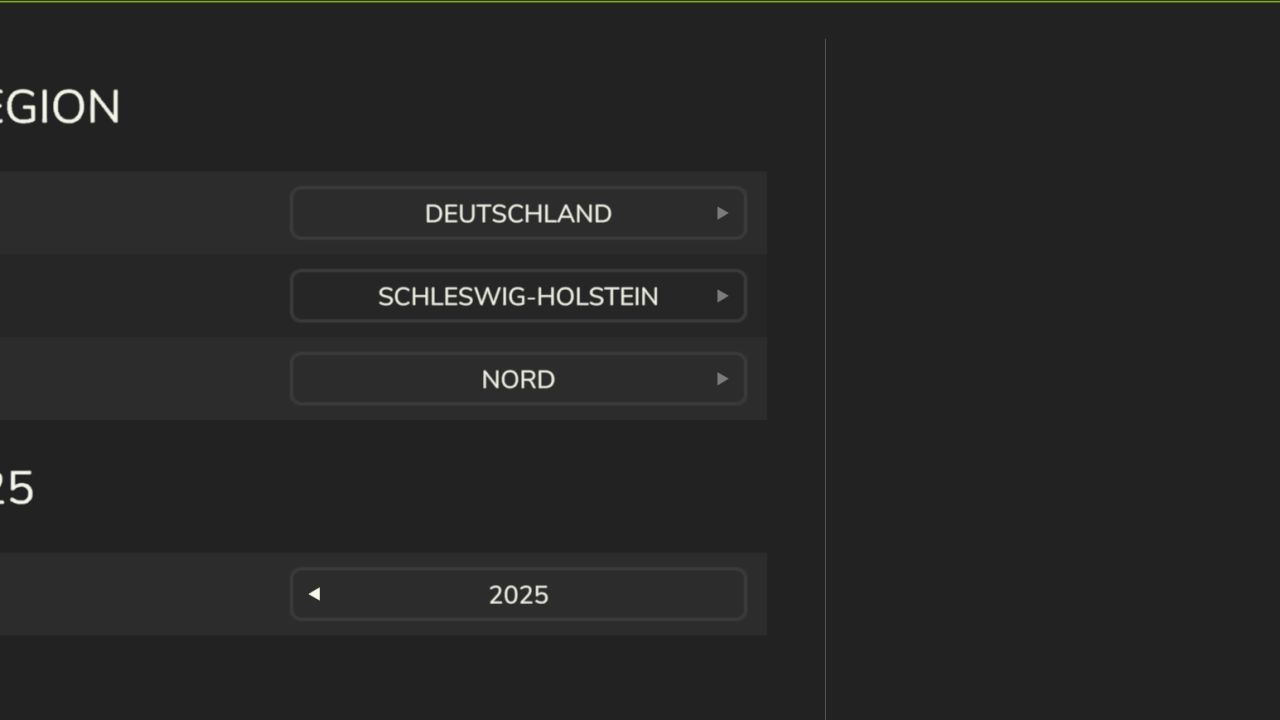
* Location system significantly expanded.
Countries and Administrative Units
* **39 countries**
* **942 administrative units**
* Federal states, states, cantons, etc.
Regional Subdivision
* North
* West
* Central
* East
* South
Old Savegames
* Old German weather regions are automatically migrated to the new system.
ERA5
* Infrastructure for real weather history (2016–2025) implemented.
ERA5 Data Status
* Data structure in place.
* The actual data for the 942 regions is not yet fully included.
* Climate fallback remains active.
5-Day Weather Forecast
* Persistent 5-day forecast added.
Weather in Savegame
* Location and five forecast days are saved.
* Large historical rainfall lists eliminated.
Weather on Loading
* Forecast is preserved and not re-randomized.
Region Change
* Old forecast is discarded and a new one generated to match the new region.
Climate Time
* In-game days per month are converted to real calendar days. Evaporation / ET0
* Now operates using climatically accurate time.
Rain / Snow / Hail
* Precipitation amounts are adjusted to real calendar time.
Drainage
* Drainage also utilizes the new climate time.
Dedicated Server
* The savegame directory is re-checked if provisioning is delayed.
* Prevents the save process from becoming permanently blocked.
Agronomy Savegame
* Yield model version and the time of the last calculation are saved.
The processing of terrain and density map data has been optimized and distributed more evenly across multiple frames. Completely rewritten. This reduces load spikes and stuttering during tillage.
Additionally, a Dedicated Server bug occurring during the day change has been fixed. It could interrupt the updating of NPC fields. The reduced and stress-dependent crop heights, as well as all terrain, weather and yield functions, remain unchanged.
Previously removed or incompatible cell formats will not be read again.
All new upcoming versions will be based on the new system and remain in place.
Unfortunately, old savegame data, such as soil moisture and similar data, will not be loaded because there were problems with the old system.
Rainstar retraction and road/field behavior optimized.
Weather region is now reliably saved on dedicated servers.
Server performance on very wet soils significantly improved.
Compaction and DensityMap write operations batched and optimized.
Topsoil, root-zone and subsoil compaction fully preserved.
Fixed a bug on the server where land values were not being calculated.
Bug fixed on 4 fold maps
-- Fixed a bug with the Rainstar that caused the retraction to no longer stop automatically and was tightened too tightly at the beginning.
-- Bug fixed with Rainstar, the logic of the pump didn't work and the drum couldn't be rotated correctly with the left mouse button.
-- Fixed layer flickering in the map menu
Soil and moisture system fundamentally converted to GIANTS Density Maps.
Significantly improved performance and fewer permanent field/cell queries.
Land values are saved and loaded securely in a save game.
Removed old, error-prone savegame/cell loading logic.
Soil moisture, topsoil, root and subsoil compaction revised.
New, more realistic compaction calculation based on wheel/axle load, tire pressure, tire width, slip, soil moisture and soil type.
Different depth effects of heavy vehicles and trailers added.
Soil cultivation more realistic: cultivators, plows, disc harrows, rotary harrows and subsoilers work differently depending on the depth of cultivation.
Compaction is more difficult or less effective when the soil is wet.
Map layers and field information revised and accelerated.
RWSM map colors are now automatically loaded when opened.
GIANTS tillage functions are detected based on events instead of constantly scanning.
Fixed several bugs with cultivators and other tillage equipment.
GIANTS return values from density map functions are now safely preserved.
FPS drops when driving on or approaching fields are further reduced.
Roads and non-relevant areas are excluded more from RWSM calculations.
Multiplayer/server stability and error handling improved.
General performance, stability and compatibility optimizations.
With this update, Realistic Water & Soil Management has been extensively developed, stabilized and optimized in particular for performance, dedicated servers and multiplayer. The existing range of functions is retained, but many internal processes have been made significantly more efficient.
Performance & Servers
Large calculations are more spread out over multiple frames.
Soil, water and agronomy processes further optimized on a chunk/cell basis.
Reduced unnecessary constant field and map scans.
Existing GIANTS values, WorkAreas and vehicle states are preferred instead of recalculating the same information in parallel.
Additional device detection only remains as a fallback for unusual third-party mods.
Time budgets for complex calculations introduced or further limited.
Reduced temporary Lua tables and unnecessary memory allocations in frequently executed functions.
Vehicle, tire and ground contact queries optimized.
Detailed tire load, contact force and slip values are only generated when actually needed.
With Visual Mud Tracks (VMT) installed, all necessary extended contact information is retained.
Storage system
The RWSM storage system has been significantly relieved.
No regular complete writing of rwsmState.xml during game operation.
Saving occurs via the normal GIANTS save game process.
Soil moisture, compaction, root health, plant water and other conditions remain in RAM throughout the game.
Changes are managed via dirty cells and only synchronized when necessary.
The previous periodic weather save has been removed.
rainstarWeather.xml is no longer written to the server approximately every 30 seconds.
Changes to region, climate or weather year continue to take effect immediately, but are only saved when the game is saved.
This means significantly less hard drive access on dedicated and Nitrado servers.
Existing save games remain compatible.
No manual rescan required.
Recovery and security functions for existing saves are retained.
Soil & Compaction
Soil model further optimized for topsoil, root zone and subsoil.
Compression also takes into account, among other things:
Vehicle weight
Tire and axle load
Tire pressure
slip
soil moisture
Soil type
Working device
Different tillage implements continue to work at different depths.
Plows, cultivators and subsoilers retain their respective effectiveness.
Seeders and planters do not remove existing RWSM compaction.
Tillage is preferably detected via native GIANTS WorkArea events.
Roads and non-relevant areas are still excluded from unnecessary calculations.
Water balance & plants
The water balance remains separated according to soil layers.
Precipitation, evaporation, water absorption and drainage are still taken into account.
Plant water is calculated depending on soil moisture and root depth.
Drought stress and waterlogging continue to influence plant and root health.
Root health and fine root condition remain part of the agronomy system.
Different crops continue to respond differently to water supply and soil conditions.
No unnecessary writes to GIANTS plant growth states.
Topography & waterlogging
Detection of hollows in the terrain and areas of waterlogging remains completely intact.
Topography cache designed to be more performance-friendly.
Significantly fewer grid positions per frame.
Computation more spread out over multiple frames.
Reuse of existing data improved.
Temporary tables reduced during terrain evaluation.
The mathematical result remains unchanged.
Cache is built automatically - no manual scan necessary.
Plant heights
Plant height/growth evaluation further optimized.
Larger map areas are more limited and processed in a distributed manner.
The existing 9-point evaluation is retained.
Query positions and weights remain unchanged.
Fewer temporary storage objects in frequently executed routines.
Shader and Scenegraph updates further limited.
Field information & map
The RWSM field info also shows, among other things:
Topsoil water
Root zone water
Subsoil water
Plant water
Root health
waterlogging
Compression
Soil structure
Precipitation
The field info uses existing cell values as directly as possible, without additional complete field scans.
The map overlay system has also been revised to be performance-oriented:
No permanent overlay calculations when the RWSM card is closed.
Map updates limited in time.Soil and agronomy data is fully preserved regardless of the overlay.
Weather & Climate
The weather and climate system remains completely intact.
Precipitation and historical weather values continue to flow into the water balance.
Weather data is managed on the server side and synchronized to clients.
Region, location and climate year can still be saved.
Removing the periodic file save does not change the weather calculation.
Rainstar & irrigation
The Rainstar has been optimized in several areas.
Feed system stabilized.
Removed duplicate physical controls when retracting.
Native animation no longer runs parallel against the RWSM joint control during autofeed.
A defined joint path controls the retraction.
Hose length is continuously calculated based on frame time.
The entry speed of 60 m per hour of play is maintained.
Behavior remains correct even at higher game speeds.
Additional strong tension spring control when retracting removed.
Regular tightening and unnecessary suspension response are reduced.
Downhill protection only works on actual slopes.
Automatic limit switch-off and pump off are retained.
Transport mode and work mode are retained.
Pump pressure, water volume, irrigation radius and water calculation remain fully available.
Ground hose
The visual Rainstar ground hose has been significantly optimized.
Previously, with a segment length of around 4 cm and a hose of 220 m, up to around 5,500 segments could be processed.
New:
Segment length optimized to approx. 10 cm.
This means a maximum of around 2,200 segments.
Terrain positions are updated less frequently and only upon actual movement.
Position buffers are reused.
The appearance and function of the hose are retained.
Network & Multiplayer
Server remains the authoritative authority for RWSM states.
Clients receive synchronized values.
Dirty cells are transferred collectively.
No complete soil map is constantly sent over the network.
Distance and relevance are taken into account during synchronization.
Network and server load further reduced.
VMT compatibility
The collaboration with Visual Mud Tracks has been further improved.
RWSM also provides data on soil moisture, compaction, tire/soil contact, slip and other conditions.
Once VMT is loaded, all the necessary extended bike and contact data will be generated. Without VMT, unnecessary additional calculations are avoided.
Help, GUI & translations
Help area extensively expanded.
Texts on soil layers, water balance, compaction, tire pressure, slip, irrigation, pumping and field information added.
Fixed GUI and DDS issues.
Incorrect help graphics revised.
All visible texts will continue to be maintained in all languages included.
For Czech, the correct identifier cz is still used.
Bug fixes
The following areas, among others, have been improved:
Server stability in irrigation functions.
Too frequent cell and terrain queries.
Pump and hose conditions.
Loading saved irrigation states.
Unnecessary terrain and plant state writes.
GUI/DDS error.
Lua and XML issues.
Regular hard drive accesses.
Dual Rainstar physics controls.
Performance peaks when loading cards.
Performance Update
Multiplayer Fixes
The bug where the weather wasn't applied correctly and it was constantly raining has been fixed.
REALISTIC WATER & SOIL MANAGEMENT – RWSM
Changelog 1.38.42.0 to 1.38.45.112
Author: Sherman
Rainstar / irrigation
- Rainstar hose retraction technically revised and neatly coupled to the connected water pump; Removed duplicate input contexts and adjusted F1 HUD to actual pump/connection state.
- Retraction speed of the Bauer Rainstar T32 increased from 30 to 60 m/h; Remaining time display adjusted accordingly.
- Slow final approach is maintained so that the sprinkler carriage is pulled towards the drum in a controlled manner.
- Automatic slope/holding brake for the sprinkler trolley added. As long as no retraction is running, rolling away is prevented; When starting, the brake remains active briefly until the hose tension is built up and then releases automatically.
- The drum unit is held in work mode via the main physical body. A permanent X/Z anchor position prevents the drum from moving downhill or backwards as the sprinkler cart is further extended.
- A tractor on the sprinkler truck no longer releases the drum lock; Only transporting the drum unit or leaving work mode releases the anchor.
- Traction force significantly increased without further increasing the 60 m/h target speed.
- Adaptive pulling force expanded to 9 finer levels. Smoothed readings, hysteresis and delayed downshifting reduce swinging between force levels and ensure more consistent feed-in, especially at 1x game speed.
Irrifrance Optima 1036 (Handed over to honved4)
- Optima fully integrated with RWSM water, pump, pressure, irrigation and soil moisture logic.
- Own AutoReel implemented with up to 550 m of hose travel and GIANTS-native component/joint physics.
- Active ingestion of Rainstar and Optima will be saved and resumed after dedicated server restart.
- Traction force, wheel contact, braking effect, chassis/sway physics, straight-line stability and short-range centering optimized.
- Original wheel, tire, suspension, fake wheel and component joint structure preserved as a technical basis.
- Optima moved out of the normal RWSM shop and prepared for an independent addon; Devices that have already been purchased remain loadable via legacy compatibility.
- RWSM remains the sole source for soil, water, weather and yield calculations.
Gameplay/Multiplayer
- RWSM menu expanded to include options for yield loss, waterlogging, drought stress, compaction, frost, weeds, root damage, plant stress optics, wet soil driving physics, vehicle compaction, rain crusting and field info.
- Yield influence selectable between off, 50%, realistic and 125%.
- Settings are saved savegame-safe and synchronized on the server side in multiplayer.
- Menu/L10N bug fixed; New and changed visible texts are maintained synchronously in all existing mod languages.
Soil / water / compaction
- More realistic post-harvest soil model: Heavy traffic can cause real compaction when soil is wet; Rain alone does not create unrealistic deep compaction.
- Heavy rain can cause siltation and surface crusting on uncovered, harvested or cultivated areas; Crop residues reduce the risk.
- Crusting can reduce infiltration and is assessed in the field information with recommendations for action.
- Deep loosening is only recommended if deep compaction is actually present and the soil is sufficiently stable.
- The entire RWSM field grid was converted to a uniform 2 x 2 m grid. This means that soil water, topsoil/root space/subsoil, compaction, driving load, root damage, plant stress, waterlogging, irrigation, yield/agronomy cells, plant height assignment and field information work in a much finer spatial manner.
- The previously tested separate 1m tramline solution has been completely removed after it caused instability when boarding vehicles.
- Old 8/12m cells are migrated to the new 2m grid upon loading; Existing water, compaction, waterlogging and damage values are retained.
- The topography auxiliary cache for sinks remains adaptive for performance reasons and is not kept as a 2m full map scan.
Performance / management map
- Extensively optimized management map and read caches without removing stored land values or map layers.
- GIANTS terrainSize, ownership data and field masks are cached and reused; Farmland ownership is updated based on events.
- Field/road masks are shared and only invalidated locally when there are real changes.
- Finished screen rectangles are reused; Map layers are preloaded in the background with a small time budget.
- Read proxy invalidation is cell-based instead of global.
- GIANTS/Precision Farming data for soil type, nitrogen, pH, weeds, weather, ownership and field status will continue to be used directly.
Plant Height/Crop Vitality- Plant height expanded from a special corn solution to a general cross-crop solution.
- GIANTS growth states, harvest maturity and fruit density maps are not changed for the visual height change.
- Five fixed RWSM height classes: 100 / 90 / 80 / 70 / 60%.
- Fruit-specific render profiles for cereals, corn, oilseeds, legumes, grass, rice, leafy/root crops and compatible mod crops.
- Beetroot, sugar beet, potatoes, carrots, parsnips and similar crops react visually more strongly than tall grain crops.
- Bad cells that already exist are taken into account directly when the map starts. Multiple neighboring samples and stable treble mixing reduce hard block edges.
- Shader writes are budgeted over multiple frames; no permanent full field scan and no additional parallel plant grid.
- Plant height is locked after map start per real GIANTS growth phase. Changes in moisture, stress, irrigation or soil do not immediately change height within the same growing season. The level will only be reassessed at the next real growth state change.
- Crop rotation or new sowing resets the phase lock correctly.
- Remaining maintenance commands: rwsmCropHeightStatus, rwsmCropHeightRebuild, rwsmCropHeightVisualReset.
Field Info
- Field info uses current live values for weather, precision farming, culture and water stress.
- “Plant water / root space” divided into two lines: first line Kc/Ks, second line available water/RAW.
- Waterlogging is explicitly displayed again when the culture is active.
- Root depth, root health, O2/drought stress, soil structure, compaction and yield factors are retained.
Weather / Weather HUD
- Weather HUD shows the time of the next actual weather change, e.g. B. → 6:30 p.m. or the following day → +1 2:00 a.m.
- Time comes directly from the synchronized GIANTS/RWSM forecast queue; no additional weather calculation and no permanent polling.
- Weather region, state/country and climate year have a config revision and are stored redundantly in rainstarWeather.xml and rwsmState.xml.
- When loading, the newer valid configuration wins; Old save games without revision are automatically migrated and both sources are synchronized.
- A mod/ZIP update should no longer reset the selected weather region.
Savegame security / ground data
- Persistence of soil, water and agronomy cells significantly secured against data loss during mod updates.
- rwsmState.xml is first fully loaded into temporary tables and validated; only then are active cell tables replaced.
- loaded=true is only set after a successful restore or when the game state is clearly new.
- New saves store expected cell counts, cell sizes and a persistent state revision.
- If the saved and loaded cell numbers do not match, the restore is rejected and save protection is activated.
- In the event of loading, XML or schema errors, an existing rwsmState.xml is not overwritten by empty/default cells.
- When loading successfully for the first time, rwsmState_backup.xml is created once as a recovery copy and is not automatically overwritten afterwards.
- Older savegames remain readable and receive the new protection information the next time they are successfully saved.
Compatibility
- No additional write access to GIANTS Growth States or Fruit-DensityMaps for the plant height function.
- Precision farming remains authoritative for its own soil, nutrient and pH data.
- Multi-layered hydrology, compaction, root damage, waterlogging, irrigation and season/yield history remain persistently stored.
- Existing save games should be able to continue to be used without restarting the career and migrated to the new 2 m grid.
Current status: RWSM 1.38.45.112
--Coupling significantly simplified: The water pump can now be connected to the Rainstar from many more positions. The laborious, precise alignment at the coupling point is largely eliminated.
---Automatic traction control: During retraction, the pump or hose reel detects how much traction is actually required and automatically adapts it to the terrain and the current resistance. This means the sprinkler is drawn in more evenly.
--Improved stability after loading: Physics and hose connections have been reworked so that the Rainstar should no longer tip over due to stored tension or joint forces after loading a save.
Hose connection optimized: The connection between the water pump and Rainstar has been simplified and made more stable, without transferring unnecessary rigid mechanical forces to the device.
-fixed version
Major performance conversion, event-based vehicle register, work area optimization, weed cache, shared RWSM/VMT wheel contact core and fix of the critical wheel contact Lua error
-Comprehensive reconstruction of the actual soil model: three-layer water balance, infiltration, runoff, deep drainage, Kc, TAW/RAW/Ks, dynamic root depth, frost, soil structure and seasonal yield
-Multiplayer/Sync level B, quantized network data, terrain/density callback broker with VMT, only purchased real fields, streets hidden and event-driven ground calculation instead of permanent full field queries.
-Consistent conversion against the seed machine FPS drops. Chunk-based processing and finally no more RWSM WorkArea geometry for Seeder/Planter
-Field info revised: nFK, three water layers in mm, irrigation requirements, understandable soil status, adaptive scaling and concrete soil improvement recommendations. The Lua syntax error has been fixed.
-Field info stabilized; in particular root health 0↔100% and changing compaction values were stabilized
-New ground-following Rainstar hose and distance-independent auto-reel, so that the move continues even without a player right next to it.
-Savegame start stabilization for Rainstar. 5-second protection phase prevents pulling impulses and the problem of the machine standing on its back or being unstable after loading.
-GIANTS hose as a visibility fallback in case the new ground hose is not initialized correctly.
-Fixed missing externalShapesFile reference so that the IrriFrance hose mesh actually loads
-Major performance conversion, event-based vehicle register, work area optimization, weed cache, shared RWSM/VMT wheel contact core and fix of the critical wheel contact Lua error
-Comprehensive reconstruction of the actual soil model: three-layer water balance, infiltration, runoff, deep drainage, Kc, TAW/RAW/Ks, dynamic root depth, frost, soil structure and seasonal yield
-Multiplayer/Sync level B, quantized network data, terrain/density callback broker with VMT, only purchased real fields, streets hidden and event-driven ground calculation instead of permanent full field queries.
-Consistent conversion against the seed machine FPS drops. Chunk-based processing and finally no more RWSM WorkArea geometry for Seeder/Planter
-Field info revised: nFK, three water layers in mm, irrigation requirements, understandable soil status, adaptive scaling and concrete soil improvement recommendations. The Lua syntax error has been fixed.
-Field info stabilized; in particular root health 0↔100% and changing compaction values were stabilized
-New ground-following Rainstar hose and distance-independent auto-reel, so that the move continues even without a player right next to it.
-Savegame start stabilization for Rainstar. 5-second protection phase prevents pulling impulses and the problem of the machine standing on its back or being unstable after loading.
-GIANTS hose as a visibility fallback in case the new ground hose is not initialized correctly.
-Fixed missing externalShapesFile reference so that the IrriFrance hose mesh can actually be loaded
Work mode FIX
Seed machine and implement performance
Processing of seed drills, direct seed drills, planting machines and seedbed combinations has been fundamentally optimized.
Multiple sowing rows within the same RWSM soil cell are only calculated once.
Duplicate and overlapping work areas are detected early and skipped.
Grid cells that have already been reached are not completely processed again with each calculation run.
Device and WorkArea discovery is cached.
Several active vehicles are processed over different frames.
Short FPS drops significantly reduced on wide seed drills and devices with many individual work areas.
Normal sowing, no-till, planters, rotary harrows, seedbed combinations and simultaneous fertilization remain fully supported.
More realistic topsoil compaction
Topsoil compaction is no longer calculated primarily based on total weight.
Tire pressure, tire width, contact patch, ground contact pressure, slip and ground moisture now have a greater influence.
Even light vehicles can cause topsoil compaction on loose or wet soil.
Low tire pressure and wide tires protect the topsoil more clearly.
The first pass continues to cause the majority of topsoil compaction.
Further passes increase the compaction increasingly slowly.
Cornering, slipping and repeated trips in the same lane increase the stress on the ground.
The compaction effect depends more on the field capacity and bearing capacity of the respective soil type.
More realistic root zone compaction
New sliding load assessment between topsoil and subsoil.
The root zone reacts particularly to medium to high wheel loads.
Depending on the moisture and soil type, the compaction effect begins with medium machine weights.
High tire pressures, slippage and repeated passes increase root zone compaction.
Subsoilers can loosen the root zone much more than normal cultivators or plows.
More realistic subsoil compaction
Previous blanket underbody compaction caused by light vehicles removed.
Damage to the underbody no longer occurs automatically with every crossing.
Low risk with axle loads below approximately 5 to 6 tonnes on stable ground.
Significantly increasing risk between approximately 6 and 10 tons of axle load.
High underbody impact with an axle load of around 10 to 12 tonnes, especially on damp or wet ground.
Underbody compaction is primarily determined by wheel and axle loads.
Low tire pressure continues to protect the topsoil, but cannot completely prevent high depth loads on heavy machinery.
Tracked vehicles reduce the surface pressure, but retain a large part of their actual load effect in the underbody.
Multiple passes in the same lane increase permanent depth compaction.
Severe subsoil compaction can no longer be completely removed in a single operation.
Soil cultivation and loosening
Cultivators, disc harrows, rotary harrows and plows mainly loosen the topsoil.
Normal tillage does not remove severe subsoil compaction.
A plow can loosen topsoil and parts of the root zone.
Repeated plowing at the same depth can create or reinforce a plow sole.
Plowing when soil moisture is too high can cause additional shear and structural damage.
Subsoilers and subsoilers work on the topsoil, root zone, plow sole and subsoil.
The effect of a deep loosener depends heavily on the soil moisture.
Best loosening effect in dry to moderately moist soil.
If the ground is very wet, the effect is greatly reduced as the ground is more likely to be smeared and plastically deformed.
A trailing packer or roller can specifically reconsolidate the loosened topsoil.
Compaction in all field conditions
Compaction works independently of the plant population.
Topsoil, root zone and subsoil compaction also address:
harvested areas
stubble fields
dug soil
plowed ground
seedbed
uncultivated field
Only additional plant, shoot and root damage requires an active plant population.
Soil cultivation equipment can partially loosen the topsoil compaction that occurred immediately beforehand.
Subsoil compaction remains intact unless a suitable subsoiler is used.
Global field simulation
Time-dependent ground values no longer only update near the player.
Existing and saved ground cells continue to run on the server side even without a player nearby.
Distant fields continue to develop in terms of:
soil moisture
Drainage
Surface drying
Soil structure
Soil life
Weed development
root stress
Yield factorsRemote helpers, AI vehicles and active machines are recorded regardless of the player position.
The previous limit of a maximum of six active computing centers has been removed for vehicle and device operations.
Newly created soil cells are permanently included in the global simulation after their first capture.
Round robin calculation
The global ground simulation is distributed in small packages over many frames.
Not all stored ground cells are calculated simultaneously in a single frame.
Each cell is updated one after the other and then placed back in the calculation order.
Elapsed time between two updates is fully taken into account.
This means that distant fields remain correctly simulated in time, without creating a large calculation block or severe FPS drops.
Compatibility and unchanged functions
WaterSoilAPI remains completely intact.
Compatibility with Visual Mud Tracks remains.
Saving and multiplayer support remain.
Existing soil, moisture, crop and yield systems remain integrated.
Rainstar, sprinkler cart, hose reel, manual attach, auto-reel and 3D model have not been changed compared to the new basic version 1.36.73.0.
The author remains solely Sherman.
Changelog – Version 1.36.76.0
Seed machine and implement performance
Processing of seed drills, direct seed drills, planting machines and seedbed combinations has been fundamentally optimized.
Multiple sowing rows within the same RWSM soil cell are only calculated once.
Duplicate and overlapping work areas are detected early and skipped.
Grid cells that have already been reached are not completely processed again with each calculation run.
Device and WorkArea discovery is cached.
Several active vehicles are processed over different frames.
Short FPS drops significantly reduced on wide seed drills and devices with many individual work areas.
Normal sowing, no-till, planters, rotary harrows, seedbed combinations and simultaneous fertilization remain fully supported.
More realistic topsoil compaction
Topsoil compaction is no longer calculated primarily based on total weight.
Tire pressure, tire width, contact patch, ground contact pressure, slip and ground moisture now have a greater influence.
Even light vehicles can cause topsoil compaction on loose or wet soil.
Low tire pressure and wide tires protect the topsoil more clearly.
The first pass continues to cause the majority of topsoil compaction.
Further passes increase the compaction increasingly slowly.
Cornering, slipping and repeated trips in the same lane increase the stress on the ground.
The compaction effect depends more on the field capacity and bearing capacity of the respective soil type.
More realistic root zone compaction
New sliding load assessment between topsoil and subsoil.
The root zone reacts particularly to medium to high wheel loads.
Depending on the moisture and soil type, the compaction effect begins with medium machine weights.
High tire pressures, slippage and repeated passes increase root zone compaction.
Subsoilers can loosen the root zone much more than normal cultivators or plows.
More realistic subsoil compaction
Previous blanket underbody compaction caused by light vehicles removed.
Damage to the underbody no longer occurs automatically with every crossing.
Low risk with axle loads below approximately 5 to 6 tonnes on stable ground.
Significantly increasing risk between approximately 6 and 10 tons of axle load.
High underbody impact with an axle load of around 10 to 12 tonnes, especially on damp or wet ground.
Underbody compaction is primarily determined by wheel and axle loads.
Low tire pressure continues to protect the topsoil, but cannot completely prevent high depth loads on heavy machinery.
Tracked vehicles reduce the surface pressure, but retain a large part of their actual load effect in the underbody.
Multiple passes in the same lane increase permanent depth compaction.
Severe subsoil compaction can no longer be completely removed in a single operation.
Soil cultivation and loosening
Cultivators, disc harrows, rotary harrows and plows mainly loosen the topsoil.
Normal tillage does not remove severe subsoil compaction.
A plow can loosen topsoil and parts of the root zone.
Repeated plowing at the same depth can create or reinforce a plow sole.
Plowing when soil moisture is too high can cause additional shear and structural damage.
Subsoilers and subsoilers work on the topsoil, root zone, plow sole and subsoil.
The effect of a deep loosener depends heavily on the soil moisture.
Best loosening effect in dry to moderately moist soil.
If the ground is very wet, the effect is greatly reduced as the ground is more likely to be smeared and plastically deformed.
A trailing packer or roller can specifically reconsolidate the loosened topsoil.
Compaction in all field conditions
Compaction works independently of the plant population.
Topsoil, root zone and subsoil compaction also address:
harvested areas
stubble fields
dug soil
plowed ground
seedbed
uncultivated field
Only additional plant, shoot and root damage requires an active plant population.
Soil cultivation equipment can partially loosen the topsoil compaction that occurred immediately beforehand.
Subsoil compaction remains intact unless a suitable subsoiler is used.
Global field simulation
Time-dependent ground values no longer only update near the player.
Existing and saved ground cells continue to run on the server side even without a player nearby.
Distant fields continue to develop in terms of:
soil moisture
Drainage
Surface drying
Soil structure
Soil life
Weed development
root stress
Yield factorsRemote helpers, AI vehicles and active machines are recorded regardless of the player position.
The previous limit of a maximum of six active computing centers has been removed for vehicle and device operations.
Newly created soil cells are permanently included in the global simulation after their first capture.
Round robin calculation
The global ground simulation is distributed in small packages over many frames.
Not all stored ground cells are calculated simultaneously in a single frame.
Each cell is updated one after the other and then placed back in the calculation order.
Elapsed time between two updates is fully taken into account.
This means that distant fields remain correctly simulated in time, without creating a large calculation block or severe FPS drops.
Compatibility and unchanged functions
WaterSoilAPI remains completely intact.
Compatibility with Visual Mud Tracks remains.
Saving and multiplayer support remain.
Existing soil, moisture, crop and yield systems remain integrated.
Rainstar, sprinkler cart, hose reel, manual attach, auto-reel and 3D model have not been changed compared to the new basic version 1.36.73.0.
The author remains solely Sherman.
-Fixed tires from the sprayer that was partially not turning
-Performance update for field scanning of individual values
-Sprinkler Fix
Stop beforehand and no longer hit the hose reel when you stop.
More performance fixes
-Manual Attach Fix
couple mechanically
get out
Connect the hose to the hose button Y assigned to you
Before uncoupling, loosen the hose again with Y
then uncouple mechanically
++Without manual attach++
normal coupling and uncoupling with Q
LS25 automatically connects and disconnects the water hose
The pump only reads the real vanilla hose status:
Hose not connected → Pump does not start
Hose disconnected while pump is running → Pump switches off immediately
-Weather Hud 3 size adjustment options now available.
Normal, small, very small
And Vanilla Hud
-Performance fixes
New weather HUD
Added modern weather HUD in weather app style.
Multi-day weather forecast supplemented with symbols for sun, clouds, rain, heavy rain, thunderstorms, snow, hail and frost.
Added current temperature and daily high and low temperatures.
Probability of rain and forecast amount of precipitation in millimeters for today and the following days added.
Added two weather icons for weather changes within a day.
Weather region and climate region added.
Added understandable month names instead of internal game periods.
Account balance, time, date, year and time acceleration integrated into the display.
Added choice between the original LS25 weather HUD and the enhanced RWSM weather HUD.
Weather texts added in all existing languages.
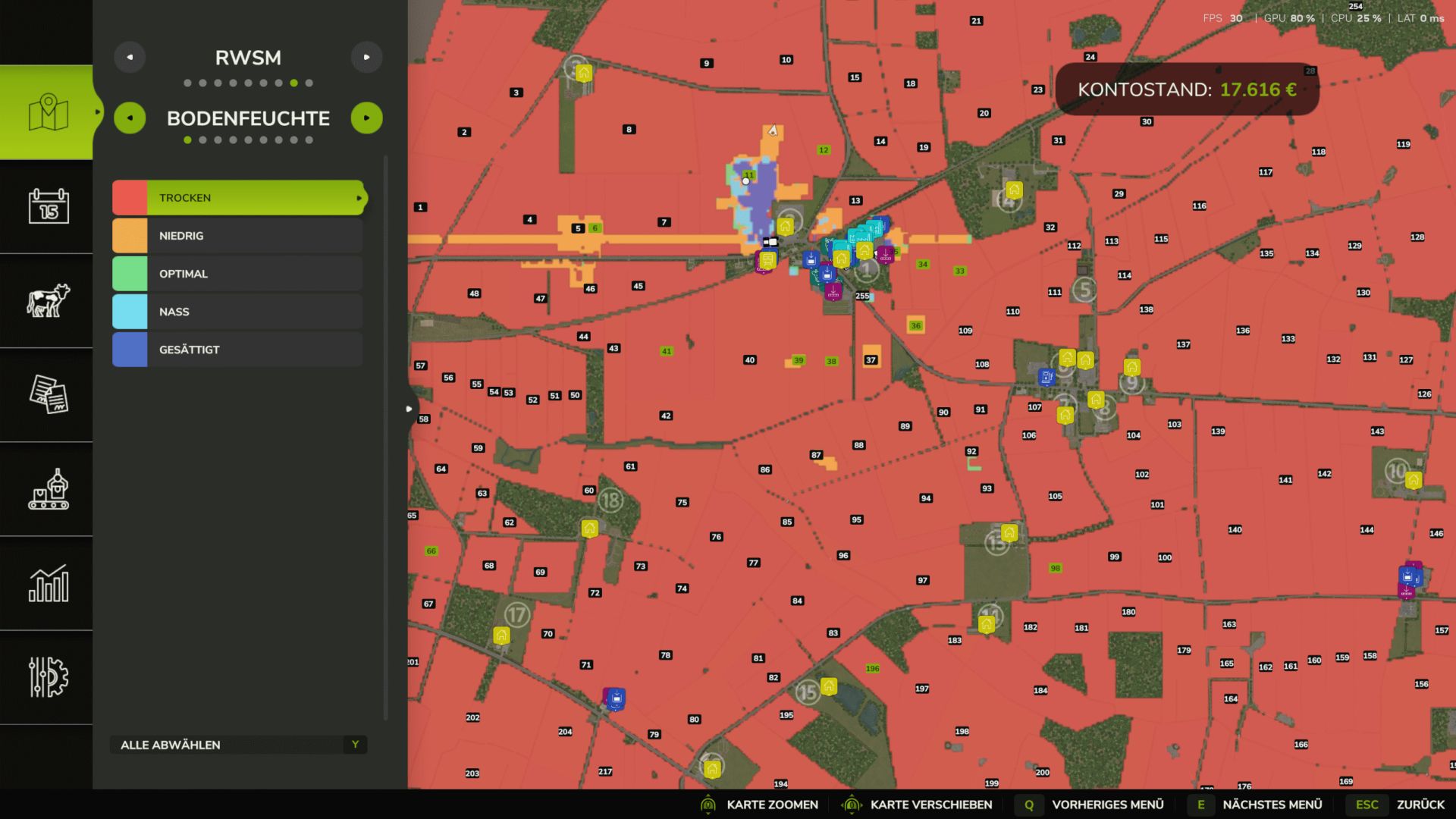
New RWSM in-game map menu
Added custom RWSM category in existing LS25 map view.
The following map levels added:
soil moisture
Navigability
Topsoil compaction
Root area compaction
Subsoil compaction
Waterlogging and drought stress
Root health
Earning potential
Irrigation history
Added custom color legends for all map layers.
Local representation of actually irrigated, compacted or damaged areas added.
Active crops are recognized directly from the game's existing fruit and growth data.
Added new neutral map class “Culture present – not yet locally assessed”.
This class realistically indicates that a culture exists, but there is not yet enough local RWSM data for a reliable assessment.
Once sufficient information on soil, water, compaction and plant development is available, the neutral condition is automatically replaced by the actual local assessment.
Missing data is no longer represented as optimal root health or 100 percent yield.
Added persistent card values for savegames and multiplayer.
Map, tab and legend texts added in all existing languages.
* Shader queries are now only executed on suitable shape nodes. Bad queries on LOD, Transform or other inappropriate nodes have been removed.
* The warning about invalid entity types for `getShaderParameter` has been fixed.
* The storage system has been linked to the regular LS25 storage process.
* The previous independent full memory timer has been removed.
* Manual save, autosave and regular exit are supported.
* RWSM data remains temporally consistent with the actual save game.
* Unnecessary XML, sorting and caching operations have been reduced.
* Natural low areas and depressions in the fields are analyzed when the map starts.
*Added adaptive topography grid for standard, 4x, 8x and larger maps.
* Repeated elevation queries during gameplay have been replaced with cached topography data.
* Several separate sinks can be recognized per field.
* After rain and irrigation, water collects more in natural low areas.
* Depressions dry more slowly and can develop permanent waterlogging.
* Waterlogging affects bearing capacity, subsidence, slippage, compaction, oxygen supply, root development and yield.
* All field info languages have been unified to a common complete key set.
* Mixed German and English fixed texts have been removed from the field info.
* Units and placeholders for percent, millimeters, hours and temperatures have been standardized.
* Soil types, weather conditions, regions, compaction, seedbed and root conditions have been fully localized.
* Rain, thunderstorms, hail and irrigation are passed on to other systems as tire and surface moisture.
* A permanently stored surface wetness memory has been introduced.
* Fields remain superficially wet for a long time after the end of precipitation, depending on the type of soil, depression, compaction and drainage.
* Drying no longer takes place using a fixed timer.
* Temperature, wind, humidity, sunlight, evaporation and seepage determine the actual drying rate.
* Load capacity, tire moisture, mud intensity and sinking behavior use the saved surface condition.
* Direct API fallbacks now also provide moisture, climate, evaporation, seedbed, plow sole, crossing and root values.
* The Water-Soil API has been expanded and versioned.
* Soil parameters for loamy sand, sandy loam, loam and silty clay have been revised.
*Field capacity, wilting point, pore saturation, infiltration, drainage and water retention were separated by soil type.
* Precipitation intensity, pre-moisture, soil structure and compaction influence infiltration and surface runoff.
* Compaction is stored separately for topsoil, root zone and subsoil.
* Vehicle weight, payload, level, wheel load, axle load, tire width, tire pressure, slip and multiple passes affect the ground load.
* High slip can cause permanent shear and track depth damage.
* Plow, cultivator, disc harrow, rotary harrow, subsoiler and roller work at different soil depths.
* Deep loosening is only fully effective if the soil moisture is suitable.
* Tilling on soil that is too wet can cause lubrication damage and loss of structure.
* Root area compaction affects water flow, plant development and yield.
* The nFK display has been limited to 0 to 100%.
* Complete pore saturation is shown separately.
* Water above field capacity is displayed as excess water in millimeters.
* Live temperature, wind and current weather values are taken directly from the game.
* Evaporation responds to actual playing conditions.
* Maximum possible sinking depth was differentiated according to soil type.
* Vehicle mass, load and axle load have a greater influence on the possible ground load.
* Empty and loaded vehicles cause different compaction effects.
* Crop Vitality Visuals 2.0 has been introduced.
* Each active agronomy cell receives permanently stored values for vigor, height, density, lodging slope, emergence quality and damage.
* Water balance, drought, waterlogging, nutrients, pH value, compaction, plow sole, roots, seedbed, weeds and crossings influence the visible population.
* Young stands react more strongly to gaps, developed stands react more strongly to changes in plant height.
* Mature plants remain technically ready for harvest.
* Growth states and original fruit density maps are not overwritten.
* FoliageBending has been removed from the plant visualization.
* A foliage copy-only interface has been prepared.* Mature copy classes for different plant heights and stand densities have been added.
* A flat field edge penalty has been removed.
* Field edge effects only arise in conjunction with compaction, drought, wind, waterlogging or other real stresses.
* Different effective ranges for corn, grain, oilseeds, legumes, root crops and grass have been added.
* Tire moisture has been completely separated from nFK and plant-available water.
* 100% nFK can be displayed on a dry surface without wet tires.
* Old lanes and dry compaction no longer create an artificial wetness effect.
* The field information for inventory development has been structured more clearly.
* Long and overlapping field info texts have been corrected.
* Technical abbreviations have been removed from visible labels.
* Fixed outdated nFK values after rain, sprinkling and when loading older save games.
* Water values of the three soil layers are now always the relevant basis for calculation.
* nFK, saturation and excess water are currently being recalculated for field info and API access.
* Irrigation updates soil moisture immediately.
* A switch between Celsius and Fahrenheit has been added.
* Internal calculations remain metric.
* Climate, pump and field info displays use the selected temperature unit.
* RWSM remains the significant source of local soil and tire moisture after rain.
* A separate mud memory prevents tires from immediately appearing dry.
* Local values for saturation, surface moisture, mud intensity, carrying capacity, sink factor and possible track depth are passed to Visual Mud Tracks.
* Artificial ground patches and permanently altered terrain textures have been removed.
* Improved connection with native FS25 wet and tire materials.
* The moisture class in the field info is only determined from the current pore saturation.
* The wetness memory continues to influence tires, mud, appearance and drivability, but no longer the visible moisture description.
* “Soil moisture” was more precisely referred to as “topsoil moisture 0–10 cm”.
* A separate surface condition has been added.
* Water values for topsoil, root zone and subsoil are displayed separately and with depth ranges.
* The soil structure is now clearly represented as a quality value: 100% corresponds to a very good structure, 0% to a severely damaged structure.
* Traffic compaction now directly uses the ratio of actual tire pressure to recommended field pressure.
* Excessive tire pressure increases topsoil compaction and shearing effects.
* A low tire pressure appropriate to the wheel load reduces topsoil damage.
* Deep compaction remains mainly dependent on wheel load and axle load.
* Topsoil, root space and subsoil compaction continue to influence root health, soil structure, plant development and actual yield.
* Savegame schemes and multiplayer synchronization have been expanded several times and remain compatible with older RWSM savegames.
* Pump, irrigation, water, soil, compaction and vitality data is permanently stored and server authoritatively synchronized.
Performance update
- RWSM now saves its full state along with the real LS25 save operation via FSBaseMission.saveSavegame.
- Manual saving and autosave are supported together.
- Unnecessary complete table sorting and XML writing processes between real game states are no longer necessary.
- The existing force save when leaving the map normally remains as a safety net.
Thanks for the help goes to @Keana
Bug Fixes and Performance Fix
Lua errors


 Precision Farming
 Visual Mud Tracks