
Czy Twój siewnik działa przez tysiąc godzin bez wymiany łożyska lub uzupełniania smaru? Żadna prawdziwa maszyna nie jest w stanie tego wytrzymać.
Ten mod wprowadza realistyczną konserwację maszyn: wymagają one smarowania, zużywają się podczas pracy, mogą ulec awarii, jeśli są zaniedbywane, oraz muszą być naprawiane przy użyciu części zamiennych, czasu i pieniędzy.
Mod działa automatycznie z DOWOLNYM holowanym lub niezmotoryzowanym narzędziem z gry podstawowej lub innych modów, wykrywając jego komponenty. Nie wymaga konfiguracji.
🛢️ REALISTYCZNE SMAROWANIE
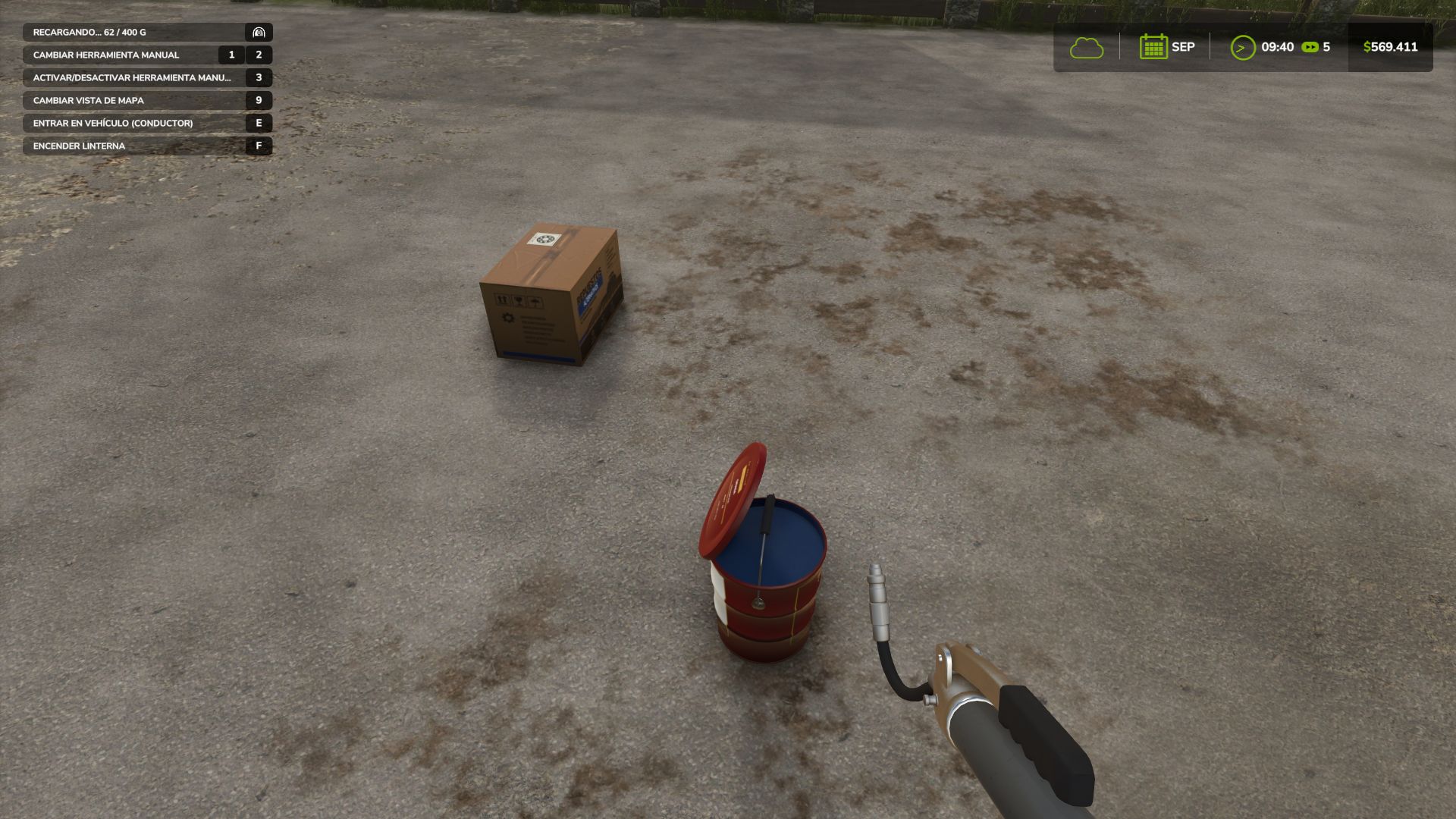
Używaj smarownicy ze standardowym lub premium smarem litowym EP2. Smar premium zapewnia dłuższe okresy między smarowaniami.
Smarowanie opiera się na rzeczywistych godzinach pracy. Długotrwałe przechowywanie może również wymagać smarowania przed ponownym uruchomieniem.
⚙️ ZUŻYCIE WEDŁUG UKŁADÓW
Symulowane są cztery niezależne układy:
• Części eksploatacyjne
• Łożyska i przekładnia
• Układy hydrauliczne
• Koła/opony
Każdy z nich ma własną żywotność. Zużycie postępuje podczas pracy i wzrasta szybciej, gdy maszyna jest brudna lub upłynął okres smarowania. Stan wpływa również na normalne zużycie maszyny i jej wartość odsprzedaży.
💥 REALISTYCZNE AWARIE
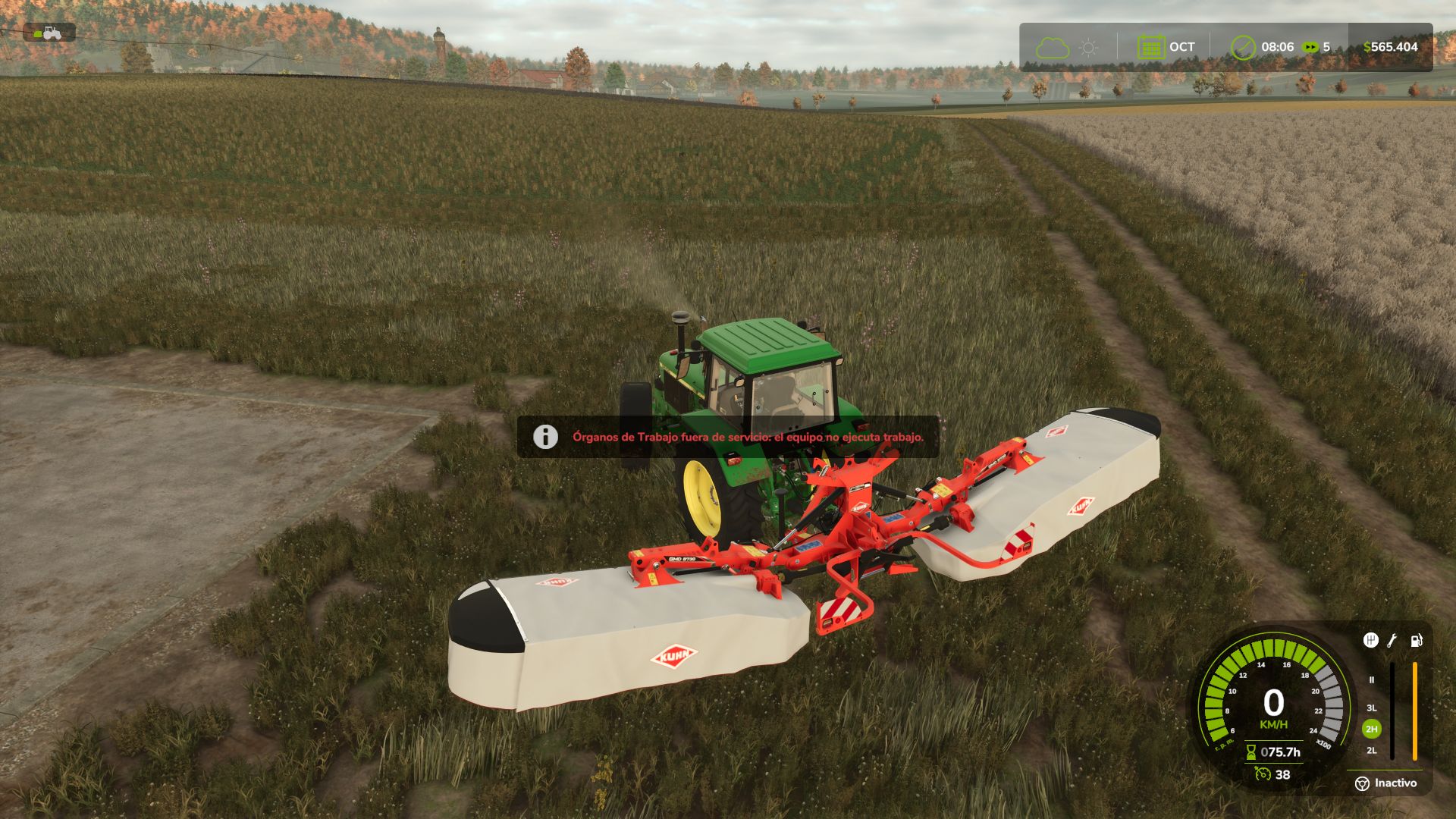
Maszyny mogą ulegać drobnym, poważnym lub krytycznym awariom. W zależności od uszkodzonego komponentu narzędzie może przestać działać, nie opuszczać się lub nie rozkładać, pracować ze zmniejszoną prędkością albo zostać unieruchomione.
Im bardziej zużyta jest maszyna, tym większe ryzyko awarii.
🧰 NAPRAWY W POLU
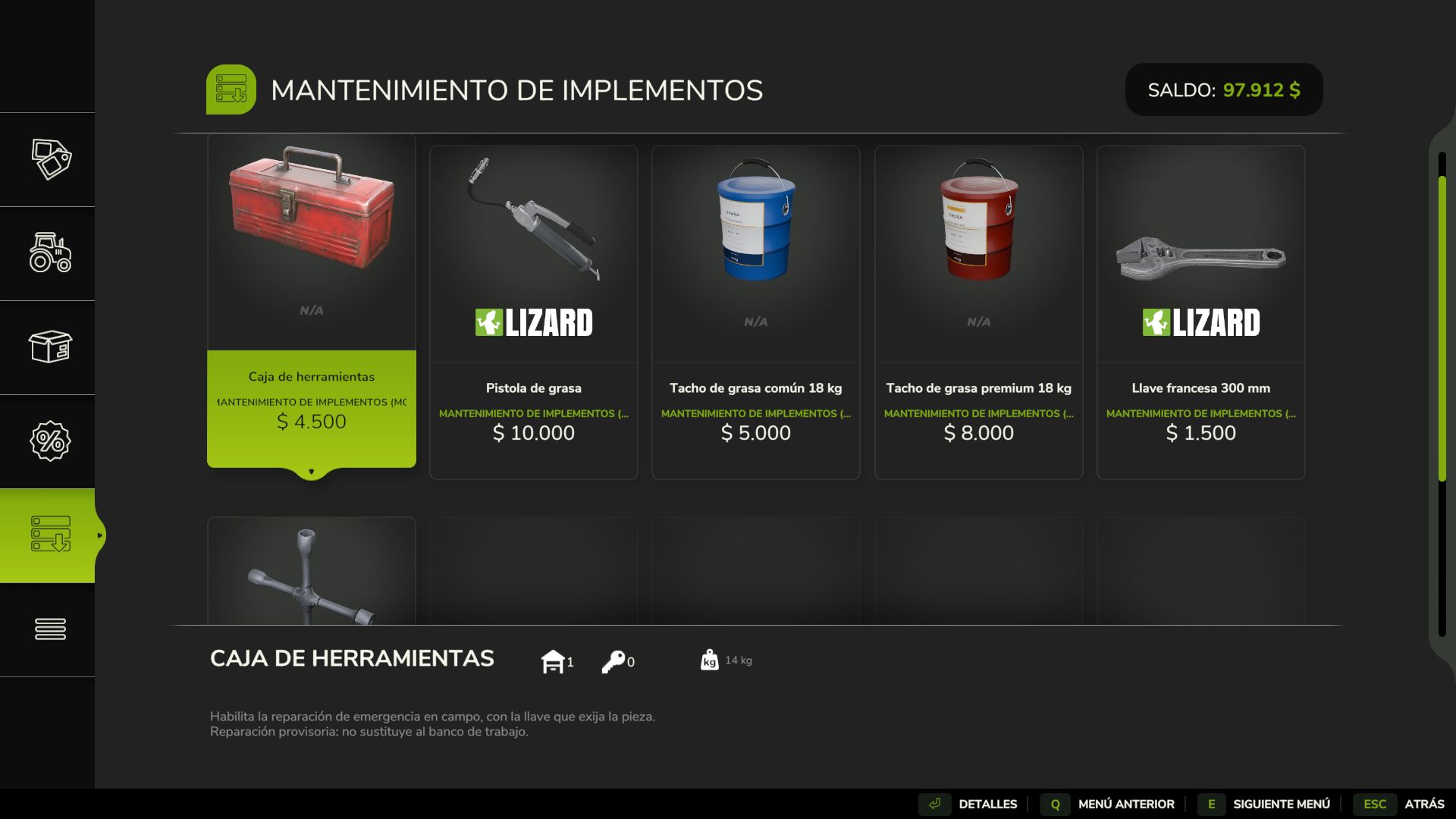
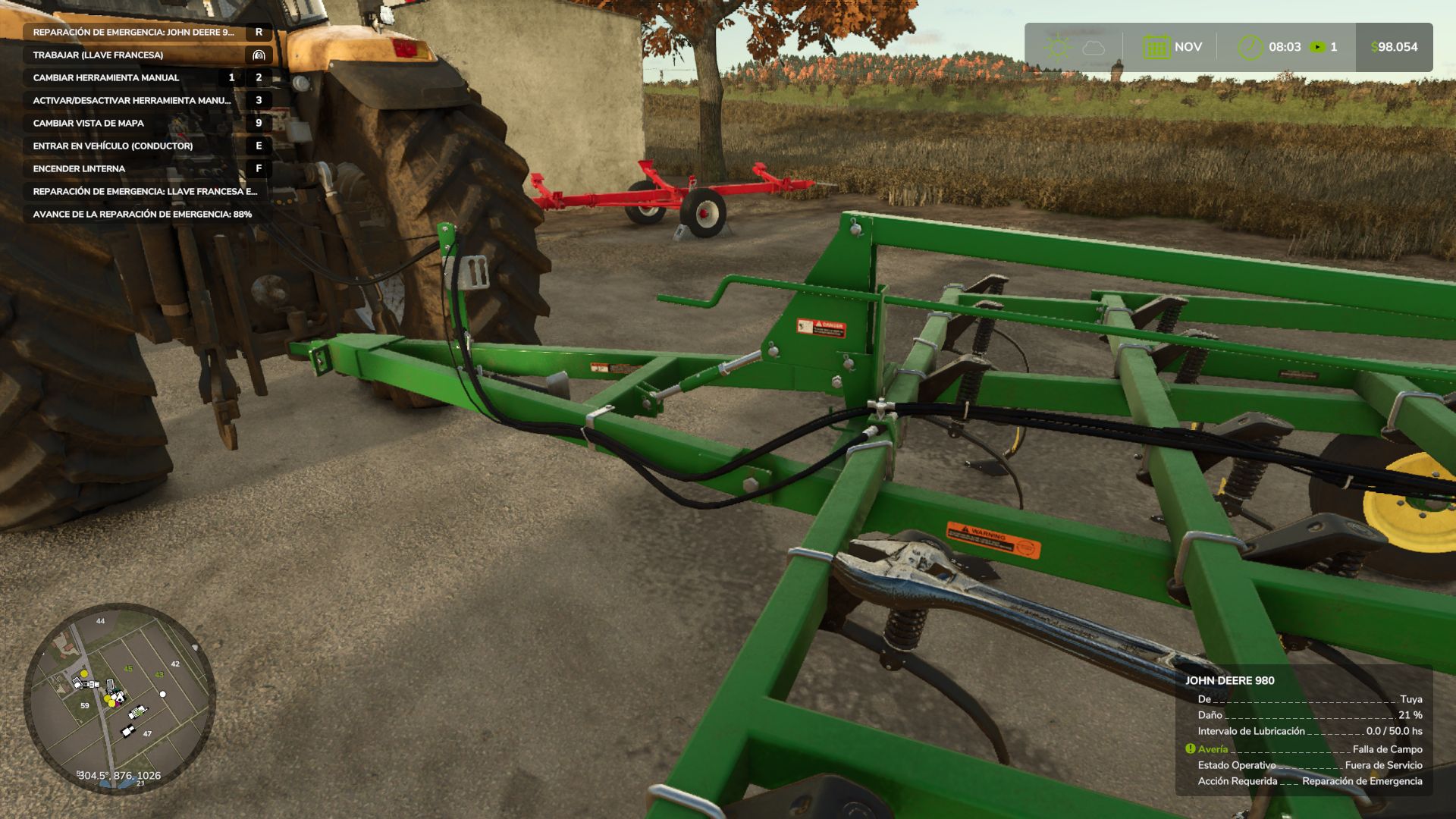
Skrzynka narzędziowa umożliwia tymczasowe awaryjne naprawy poważnych usterek w polu, pozwalając kontynuować pracę z ograniczeniami. Krytyczne awarie wymagają warsztatu.
🏭 WŁASNY WARSZTAT
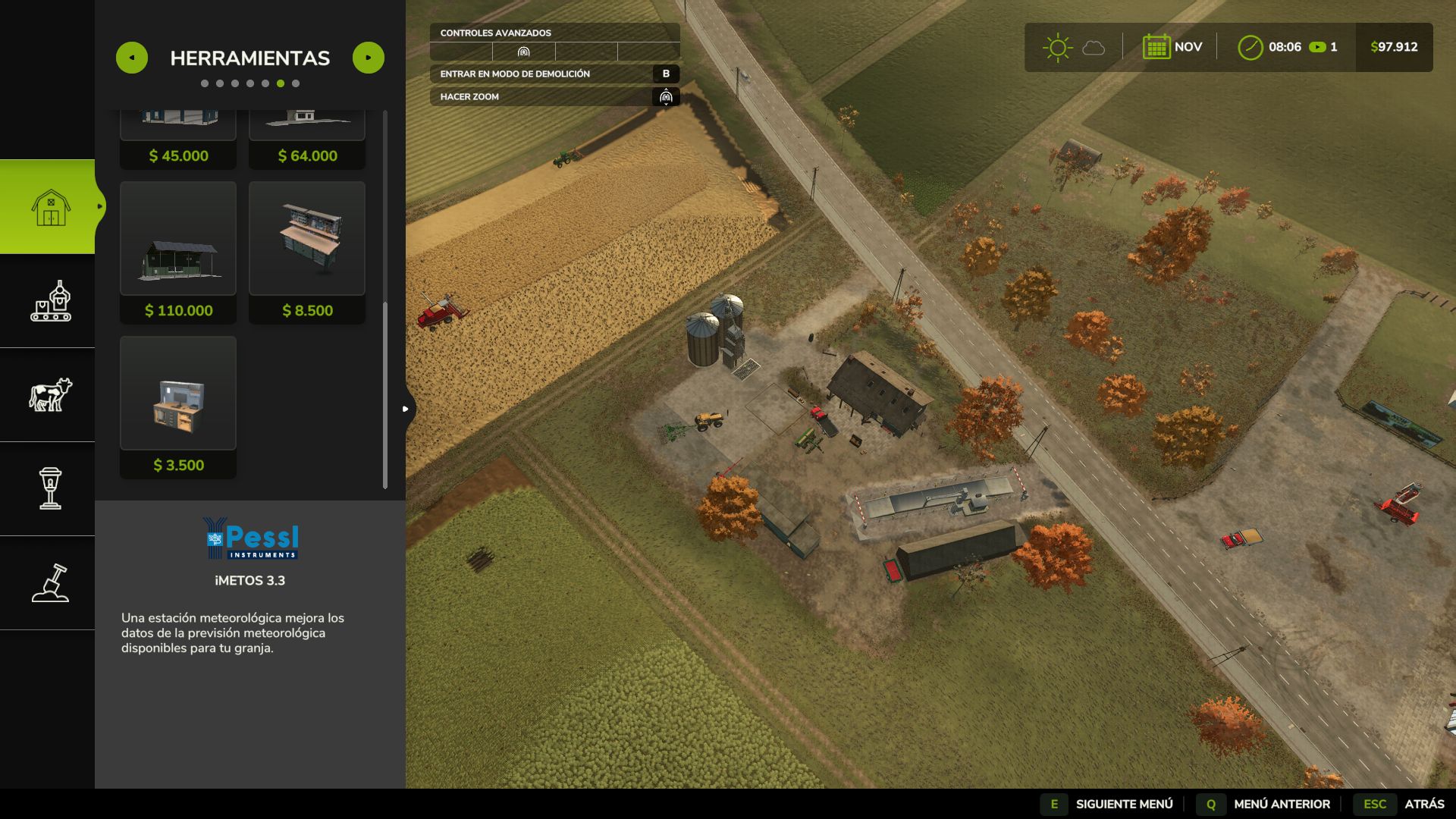
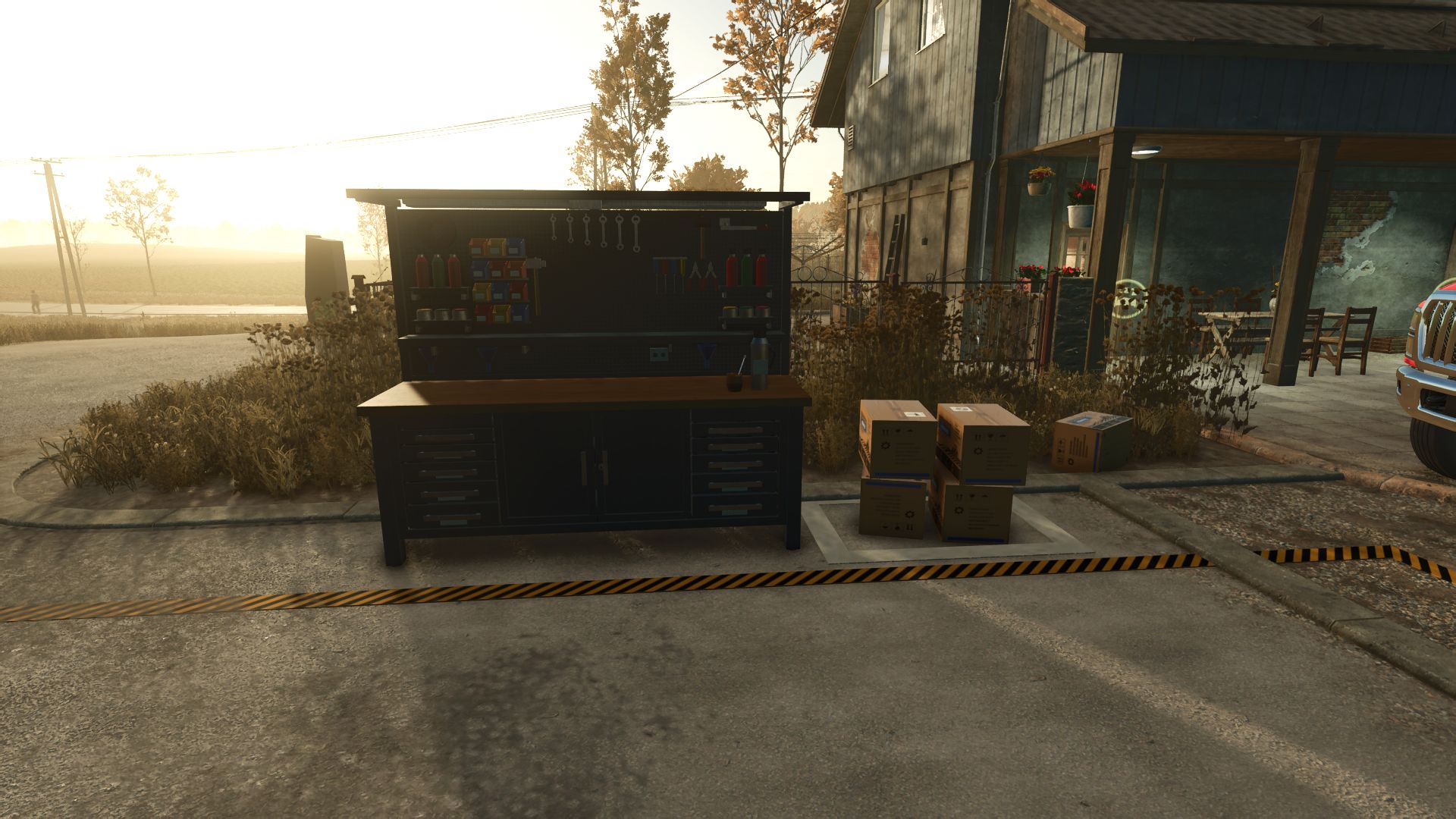
Umieść na swojej farmie stół warsztatowy ze stanowiskiem serwisowym, aby przeprowadzać diagnostykę i naprawy.
Naprawy mogą korzystać ze STANDARDOWEGO lub szybszego EKSPRESOWEGO serwisu i trwać od kilku godzin do kilku dni. Naprawa awarii nie usuwa istniejącego zużycia maszyny.
🔩 FIZYCZNE CZĘŚCI ZAMIENNE
Diagnostyka wyświetla godziny pracy, zużycie wszystkich czterech układów oraz wymagane części zamienne.
Serwis wymaga fizycznych zestawów części eksploatacyjnych, łożysk, hydrauliki lub opon. Dla każdej maszyny przechowywana jest pełna historia serwisowa.
🏷️ OEM LUB ZAMIENNIKI
Części zamienne są dostępne jako OEM lub zamienniki. Zamienniki są tańsze, ale mają krótszą żywotność i mogą wiązać się z większym ryzykiem przedwczesnej awarii.
🖥️ PORTAL DOSTAWCY
Użyj komputera zamówień, aby kupować części zamienne oraz wybierać ich jakość i ilość. Dostawa trwa kilka dni, a części są fizycznie dostarczane do wykorzystania w warsztacie.
⚙️ FUNKCJE
• Automatyczna obsługa narzędzi z gry podstawowej i modów
• Realistyczne smarowanie i śledzenie godzin pracy
• Cztery niezależne układy zużycia
• Drobne, poważne i krytyczne awarie
• Awaryjne naprawy w polu
• Diagnostyka i naprawy w warsztacie
• Fizyczne części zamienne i zamawianie u dostawcy
• Części OEM i zamienniki
• Historia konserwacji i obsługa zapisów gry
• Kompatybilność z trybem wieloosobowym i serwerem dedykowanym
• Terminy dostosowują się do długości miesiąca w grze
• Angielski, hiszpański, niemiecki, francuski i włoski
• Kompatybilność z Agricultural Financial System (GN Realism)
Major update from the published 1.0.1.0. Everything below is new or changed; anything not mentioned remains unchanged.
🔧 **NEW HAND TOOLS**
· Adjustable wrench and cross wrench, available in the store (Tools), reusable.
· Mechanical work is now performed with the correct tool **IN HAND**: the tool animates, the ratchet sounds, and the progress bar advances while holding the trigger near the implement. Without the correct tool, the work pauses.
· The adjustable wrench is used for wear parts, bearings and hydraulics; the cross wrench is used for wheel nuts.
💲 **PRICES**
· Workbench: from $18,500 to $8,500 (daily maintenance from $25 to $10).
· Purchase Terminal: from $24,000 to $3,500 (daily maintenance from $30 to $5).
· Tools: adjustable wrench $1,500, cross wrench $1,900.
🏭 **WORKBENCH**
· New table-style diagnosis: one row per system with its pictogram, color-coded status, wear, installed part (OEM / Aftermarket), remaining service life, required parts and quantity, required tool, available stock and verdict.
· Maintenance service is performed in work stages, with the correct tool in hand and within 2.5 m of the implement, from any side. The stages take longer than before (actual work, not a single click).
· With the tool in hand and the implement in the service bay, the trigger can also start the service.
· Replacing the bearing kit leaves the assembly properly lubricated: the lubrication interval is reset to zero.
· More tolerant spare-parts supply zone.
· On-screen prompt when approaching the workbench: what to do with the bench (position implement, open diagnosis, cancel service).
🛢️ **GREASE GUN & GREASE TUB**
· The grease tub now has a LID: it can be opened and closed with its own action, and remains in the state you left it. With the lid closed, the grease gun cannot load, and the screen tells you so.
· New refilling system: aim at the tub opening, hold the trigger and grease is transferred gradually, with the amount shown on screen and the plunger rod coming out of the barrel in short pulls. The operation can be interrupted without losing the transferred amount.
· Greasing action reworked: the lever now actually opens and closes on each pump, with sound.
· On-screen prompts: refill available, refilling, lubricating, tub closed.
· When grease runs out, in addition to the warning you can hear the dry-metal squeal while continuing to work without lubrication.
💥 **BREAKDOWNS**
· Field failure (Level 1) is now a real breakdown: it has a functional consequence, can be repaired in the field and generates its own work order, with low cost and short duration.
· The consequence is always determined by the failed component, including critical failures.
· Hydraulic leak (field or serious failure): the implement can keep working, but folding, lifting and lowering operate at one quarter speed, with hissing and a warning. Ruptured hydraulic system (critical): no pressure, no folding, lifting or tipping.
· Progressive failure risk with wear, with no thresholds: a new part almost never fails, while a worn part is increasingly likely to fail.
· Spare-part reliability recalibrated: aftermarket parts have a higher chance of having a manufacturing defect, while original parts can also fail, but much less often.
· Each component has its own failure sound (metal breaking, bearing rattling, hose bursting, escaping air), while a critical failure adds a heavy impact sound and triggers the onboard warning.
· The message tells you what failed, what you lost, and what you can do.
🧰 **EMERGENCY REPAIR (TOOLBOX + TOOL)**
· No longer a single click: the toolbox must be placed next to the implement, the tool required by the failed component must be held in hand, and the repair takes about 12 seconds.
· Emergency repair availability is determined by the component and failure type, not severity alone: wear parts and hydraulics can always be repaired; bearings and wheels can be repaired up to serious failure; the chassis can never be repaired in the field.
· Operating margin depends on the component (2 to 4 hours). A second repair on the same failure lasts 60% as long, and there is no third repair.
· With an active emergency repair, the workbench recognizes the outstanding repair: it opens the work order for the pending definitive repair, showing the correct component, budget and estimated time.
🖥️ **PURCHASE TERMINAL**
· The catalog shows the pictogram for the selected system and the delivery time matches the time shown in the purchase-order list (same calculation, same format).
· On-screen prompt when approaching: open the supplier portal, orders in transit, or no workbench within range.
· Interface sound when opening the catalog and diagnosis.
📖 **INTEGRATED GUIDE**
· New 17-step guide (Alt+H, rebindable) explaining every component, tool, breakdown and consequence, using the actual values from the mod.
🖼️ **INTERFACE & TEXT**
· Implement information panel always shows damage, with highlighted alerts for lubrication, breakdowns, provisional repairs and depleted parts.
· Work order layout corrected (rows no longer overlap).
· Terminology unified across all five languages (workbench, purchase terminal, emergency repair, definitive repair, maintenance service, purchase order).
· German localization now includes correct accents.
✅ **1.0.1.0 FIXES RETAINED**
· The game's standard repair system does not apply to implements managed by the mod (clear warning shown to the player).
· Working speed limits are respected by the tractor (the harrow no longer runs at 32 km/h), with additional limits from breakdowns / worn tires / emergency repairs also respected while towing.
· With Agricultural Financial System installed, purchase orders use the available credit margin.
Compatible with savegames from 1.0.x: no new game required. Multiplayer and dedicated server supported.
Standardowa naprawa w grze (warsztat / dealer) nie dotyczy już maszyn obsługiwanych przez ten mod: pobierała pieniądze, nie usuwając awarii ani zużycia. Wyraźny komunikat kieruje teraz do stołu warsztatowego.
Naprawiono: maszyny mogły pracować z prędkością większą od ich znamionowej prędkości roboczej (np. brona talerzowa przy 32 km/h). Ograniczenie prędkości zwracało tylko jedną z dwóch wartości oczekiwanych przez grę, przez co ciągnik je ignorował. Ograniczenia prędkości wynikające z awarii, zużytych opon i poprawki obowiązują teraz również podczas holowania.
Naprawiono: po zainstalowaniu Agricultural Financial System sprawdzanie limitu kredytowego przy zamówieniach części po cichu korzystało z salda gotówki. Teraz używana jest marża AFS.